
Trends In Sustainable Architecture For 2015
 TRENDS IN SUSTAINABLE ARCHITECTURE DEFINITION:
Talking about trends in sustainable architecture is a slippery slope. Many of the “trends” are a simply the re-discovering of good design that worked well before we had so much technology to overcome poor design. That IS a plug for proven passive design solutions, but it IS NOT a criticism of technology. That is the strength of integrative design - to be able to look at entire system holistically and use the best of passive and active design solutions to obtain the optimum results. The following ideas are not new, but they are some of the ideas that are “top of the mind” in sustainable design today.
 SUSTAINABLE DESIGN TRENDS AND EXAMPLES:
Below you will see what we believe to be some of the major sustainable design trends unfolding here in 2015. There are certainly other trends and evolutionary movement in the green building industry and we will write about those as well. So, please subscribe or bookmark this blog and you can stay informed and hopefully use some of our green building expertise and experience to help you with your next building project.
Trends In 2015:
1. Resiliency
Resilience: Def. Noun
- The capability of a strained body to recover its size and shape after deformation caused especially by compressive stress
- An ability to recover from or adjust easily to misfortune or change
The Resilience Alliance defines resilience as the capacity of a system to absorb disturbance and reorganize while undergoing change so as to still retain essentially the same function, structure, identity, and feedbacks.
A sustainable building needs to adapt over its life to changing conditions, and its life must be a long one. It needs to adapt to changes in climate, temperature, rainfall, sea level, flood patterns, advancements in building technologies such as heating and cooling systems, functional changes by the users, etc. It needs to be tough and flexible at the same time.
2. Biophilia
Biophilia Def. Noun
- A love of life and the living world; the affinity of human beings for other life forms.
The biophilia hypothesis suggests that there is an instinctive bond between human beings and other living systems. Edward O. Wilson introduced and popularized the hypothesis in his book, Biophilia (1984). He defines biophilia as "the urge to affiliate with other forms of life".
Whether or not we have thought about this concept, we know it. We enjoy being in the natural environment. When we cannot be in it, we enjoy looking at it from our balcony or through our window. The sun light and shadows that move across a space change the space constantly in a predictable way that is dynamic, full of life, and still comforting. We love the sound of the rain. We love the smell of the forest. The integration of our built world into the natural world is so important.
3. Net Zero Energy
A net zero building, is a building with zero net energy consumption, meaning the total amount of energy used by the building on an annual basis is roughly equal to the amount of renewable energy created on the site. See the Wikipedia definition of Net Zero Energy.
The living building Challenge has its own Net Zero Energy Building Certification. You can read more about this certification here: http://living-future.org/netzero
The Whole Building Design Guide also has a Net Zero Energy Building resources which you can read more about here: http://www.wbdg.org/resources/netzeroenergybuildings.php
We certainly must get to net zero energy building design by 2030. Many countries in Europe will get there much faster. This is a goal we can achieve step by step. Each building we design, or (as an owner or investor) commission to be built must be more energy efficient than the last one. And it must make significant leaps, not just tiny incremental improvements. Net Zero Energy Buildings are doable NOW. We can gain great efficiencies with thoughtful, integrated building design and technologies that can get us 60-80% more efficient than the codes require, and we can supplement the rest with renewable energy sources harvested right at our building site, using PV, solar thermal, geothermal, wind, or whatever is available at the project location.
4. Biomimicry
The Biomimicry Institute defines biomimicry as:
“Biomimicry is an approach to innovation that seeks sustainable solutions to human challenges by emulating nature’s time-tested patterns and strategies.”
Janine M. Benyus’ book, Biomimicry Innovation Inspired by Nature published in 1997 got the whole idea started in the US.
The Whole Building Design Guide also has Biomimicry resources at: http://www.wbdg.org/resources/biomimicry.php
This is a wonderful concept that is being utilized in the design of many different things, from carpets, to aerodynamic shapes for the front of vehicle, to building design. It is using the lessons from nature- lessons that have been learned and proven over millennium- and applying those lessons to solve problems we face in design.
These trends are important. Every business and their industry has trends but without being too bias, The Sustainable Design Architectural Industry and these trends are paramount and need to obtain the attention of :- Building Project Coordinators
- Architectural Firm Executives
- Multiple Project Decision Makers
- New Home Owners
- Residential & Commercial Architects
- Board Of Directors In The Education, Healthcare, Non-Profits, Interior Design Firms and More!
I would also like to offer you some other green building/sustainable architecture information, including LEED certified building examples & other relevant articles:
- Sustainable Residential Design Ideas For Florida (& other states)
- What Can Be Learned From A LEED For Home Charrette
- Green Interior Design Project Examples
- Sustainable Design Projects & Examples
- Hospitality Industry Green Building Design Projects
- Healthcare Green Building Ideas & Examples
 PUTTING IT ALL TOGETHER:
Carlson Studio is a LEED accredited team of sustainable design and green building professionals in Sarasota Florida. We encourage you to connect with us and ask any question you may have when considering an architect for an upcoming project that falls into any of the categories mentioned above. You can get a no obligation estimate, ask any questions when implementing your research or reach out and ask an opinion on an ongoing project.
Just use the button below to connect with us.
Good luck and highest regards to all that are considering our environment and including sustainable design in their construction plans.

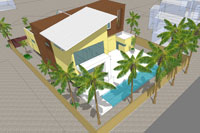 On the residential side:
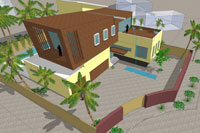 The Non Residential Side: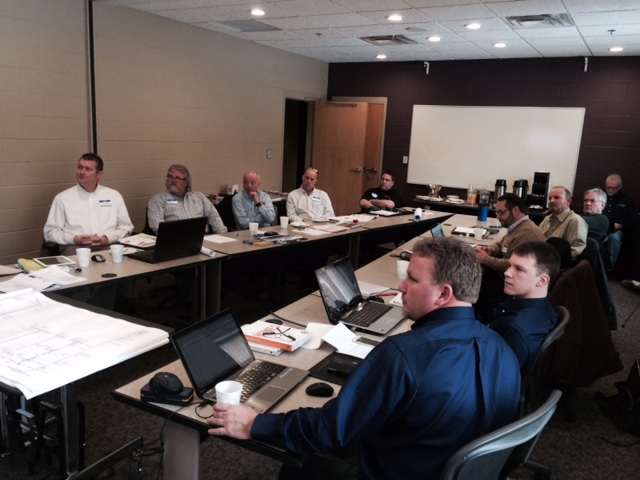
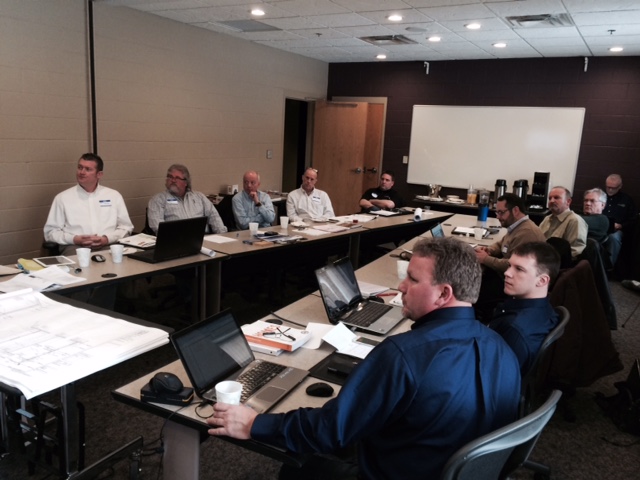 Carlson Studio Architecture is currently designing a LEED for homes project in Michigan. As part of the design process we held a
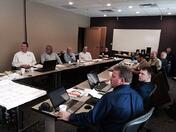 The first thing one needs to do for a successful charrette is manage the logistics. We met at a great venue called the Pinnacle Center in Hudsonville, Michigan and we were treated with a great conference room full of all the necessary AV equipment that we needed, as well as coffee, breakfast, lunch and breaks throughout the day to make the whole thing very enjoyable. Don't overlook the details and making the participants comfortable during the charrette process.
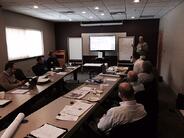 For this particular home, because of its size, we need to achieve 100 credits in the rating system to obtain our goal of platinum certification. Are preliminary checklists were reflecting scores between 88 and 94 credits. The variation was coming mostly from the HERS score which was anticipated to be anywhere between HERS index of 30 and a HERS index of 44.
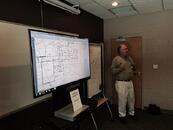 One of the most interesting discussions of the day was about the homes heating and cooling systems. It was determined that there are more heating load than cooling load, but that it was important that both heating and cooling be provided. The initial basis for the design was a forced air system for both heating and cooling using highly efficient equipment. And there was a need to make the home more energy-efficient to get it from the gold to the platinum level of certification. The air-conditioning and heating sub-contractor provided great input, and practical analysis, as well as a specialist in renewable energy systems (such as PV, solar thermal and geothermal systems) provided his perspective as well. After a great deal of discussion and various systems options, we decided to proceed in evaluating a radiant hydronic floor heating system for the first floor, supplemented with a forced air heating system for the second floor that would also serve as the forced air cooling system for the entire house. We will supplement both systems with solar thermal roof mounted water heating to preheat the water needed for the hydronic floor system and PV solar electric panels supplement the entire system including the forced air system cooling and heating. The PV solar system could be in the range of 5 KW to 10 KW. Solar thermal is yet to be sized but it will provide support to a natural gas fired boiler that will help maintain the water temperature under any conditions. Successfully integrating the systems together should improve our HERS score down to the low 30s or maybe better. Also we will integrate the domestic hot water heating with the radiant floor heating by having those two system share their heat energy which will be an important link to save energy.
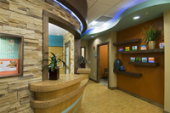 There are many fundamental a
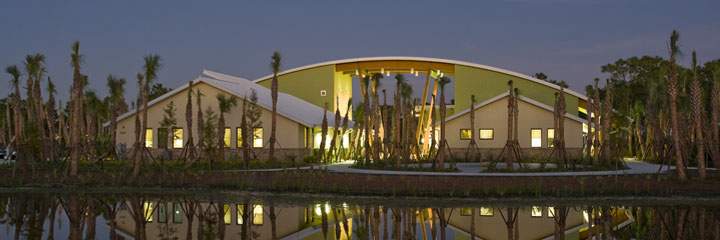
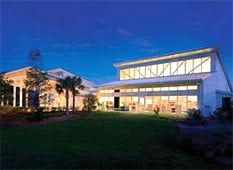
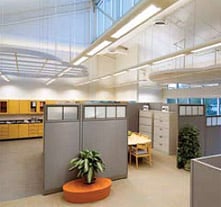 The buildings’ orientation to the sun and strategic window placement ensures maximization of northern sunlight for day-lighting within the buildings, enabling heating from the sun during winter months and optimal shading during the summer.
 The 26,000-square-foot